16 Rock Landscaping Ideas to Transform Your Outdoor Space
Are you looking to transform your outdoor space with natural elements that require minimal maintenance while adding incredible visual interest? Rock landscaping offers a solution for homeowners seeking durability, versatility, and aesthetic appeal without constant upkeep.
Incorporating stones and pebbles into your yard design creates striking contrast against plants and structures while serving practical purposes like erosion control and water conservation. Whether you have a sprawling backyard or a compact courtyard, these rock landscaping ideas can inspire your next outdoor project.
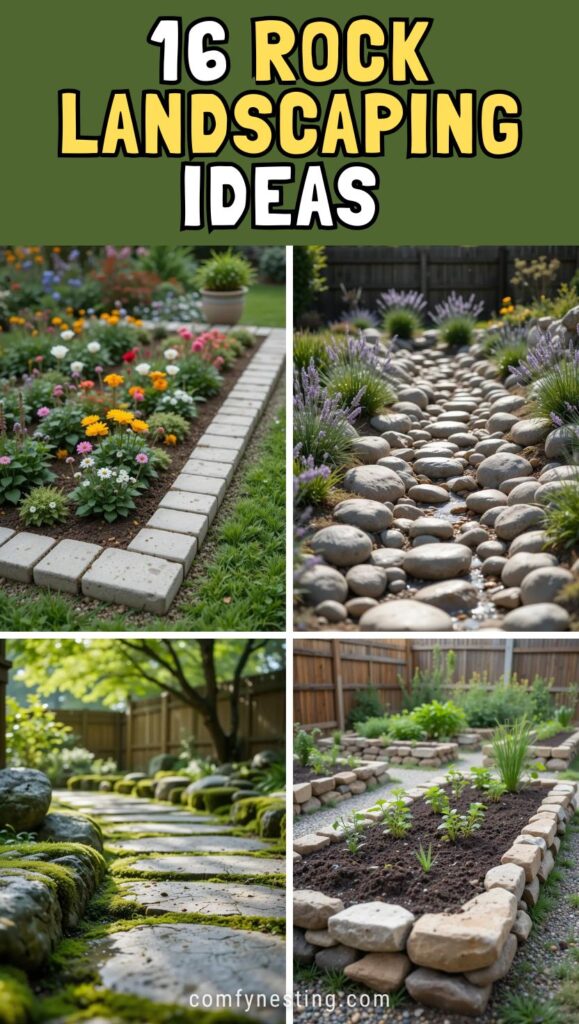
Why Choose Rock Landscaping?
Rock landscaping provides numerous benefits beyond visual appeal:
- Drought-resistant design reduces water consumption
- Minimal maintenance compared to traditional lawns
- Year-round aesthetic interest regardless of season
- Cost-effective over time with little replacement needed
- Environmental advantages like reduced erosion and improved drainage
Let’s explore 16 creative ways to incorporate rock landscaping into your outdoor spaces.
1. Japanese-Inspired Rock Garden
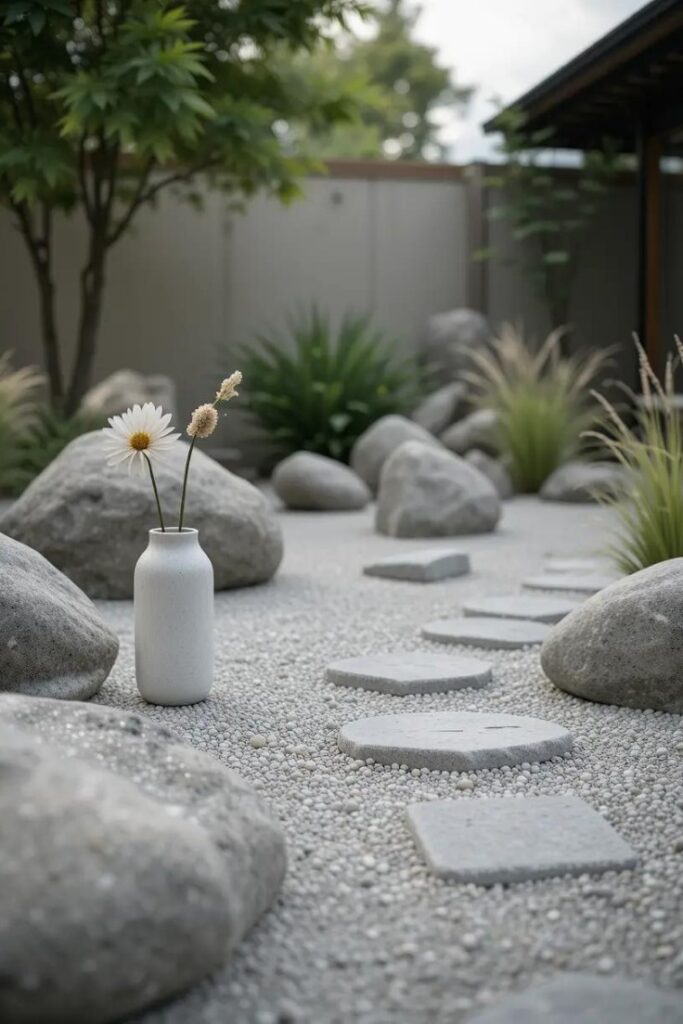
Create a meditative space with carefully arranged larger stones amid a sea of smaller pebbles. This minimalist approach to rock landscaping emphasizes negative space and geometric patterns. Add sparse plantings of ornamental grasses or small evergreens to complete the look.
Key elements:
- Varied stone sizes positioned thoughtfully
- Raked patterns in fine gravel
- Strategic placement of moss or low-growing plants
- Simple, clean lines throughout the design
2. Dry Creek Bed Installation
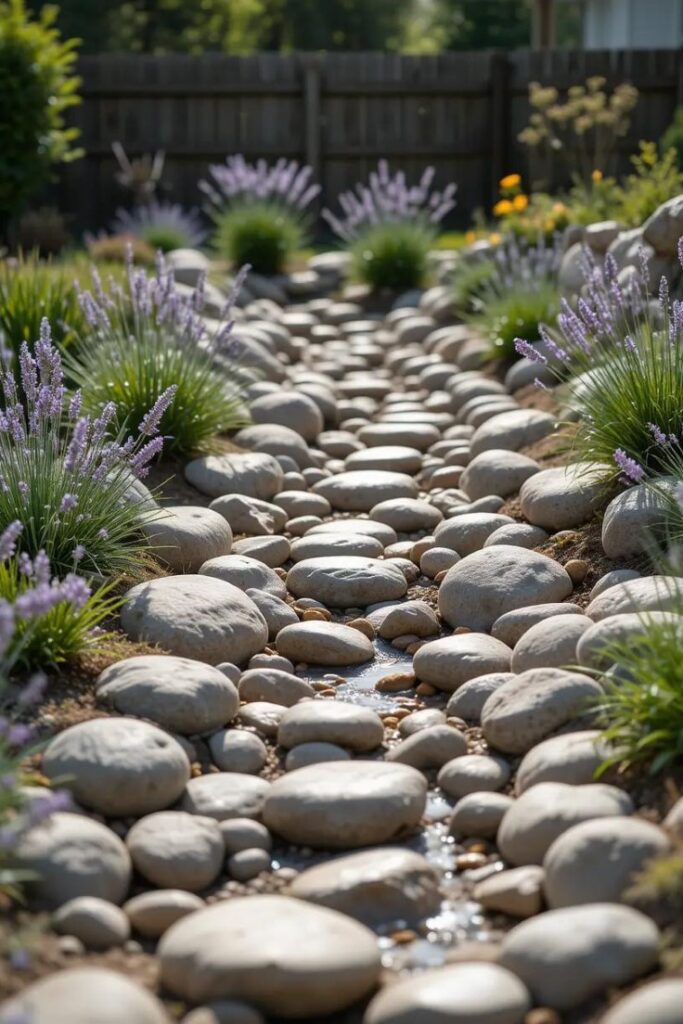
Functional and beautiful, a dry creek bed addresses drainage issues while adding visual interest. This rock landscaping technique uses stones of various sizes to mimic a natural waterway. When rain comes, it serves its practical purpose, but remains attractive during dry periods.
Design your creek bed with:
- Larger stones along the edges to create defined banks
- Medium-sized rocks scattered throughout the “streambed”
- Small pebbles filling spaces between larger stones
- Strategic plantings of moisture-loving perennials nearby
3. Terraced Rock Walls
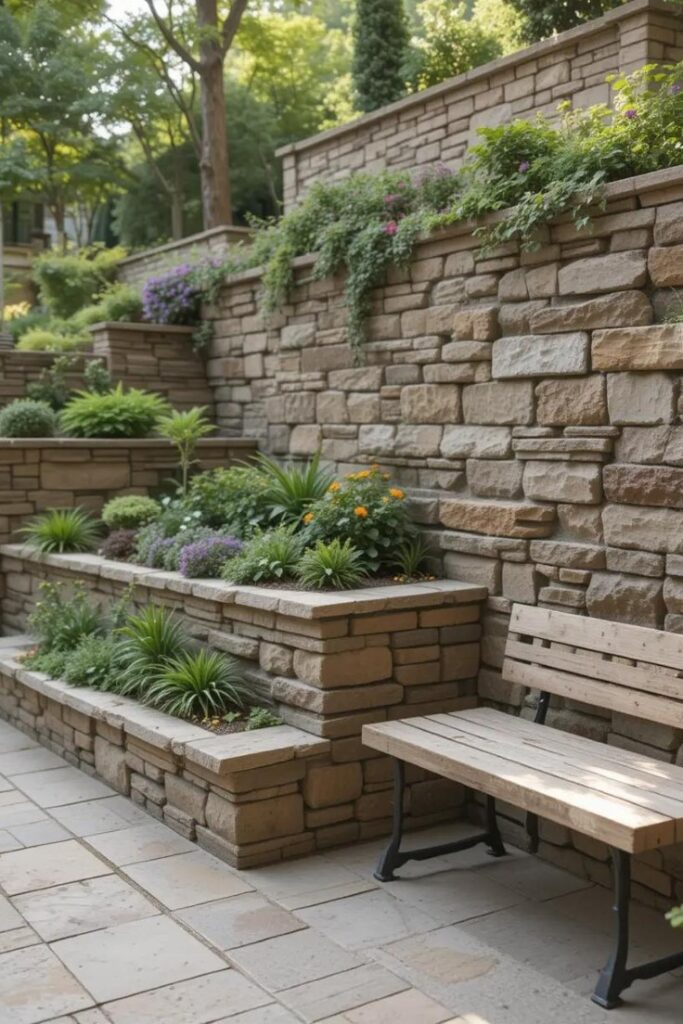
Transform sloped areas with terraced rock walls that create usable planting space and prevent erosion. This impressive rock landscaping technique adds architectural interest while solving challenging terrain issues.
Consider these approaches:
- Dry-stacked stone walls for a rustic appearance
- Mortared stone for more formal designs
- Integrated steps between levels
- Cascading plants to soften the stone edges
4. Rock Border Edging
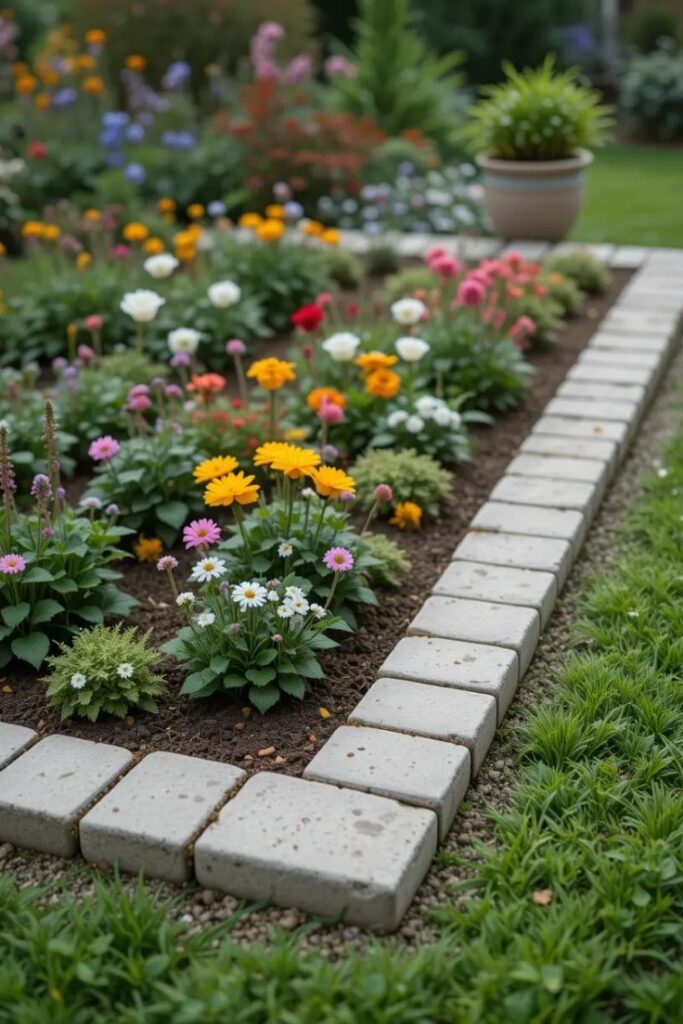
Define garden beds and pathways with stone border edging that creates clean transitions between different landscape zones. This simple rock landscaping technique immediately elevates your garden’s appearance.
Popular options include:
- Uniform cobblestones in a straight line
- Varied river rocks for a more natural look
- Flat stacked stones for vertical interest
- Combined rock sizes for textural contrast
5. Stone Pathway Creation
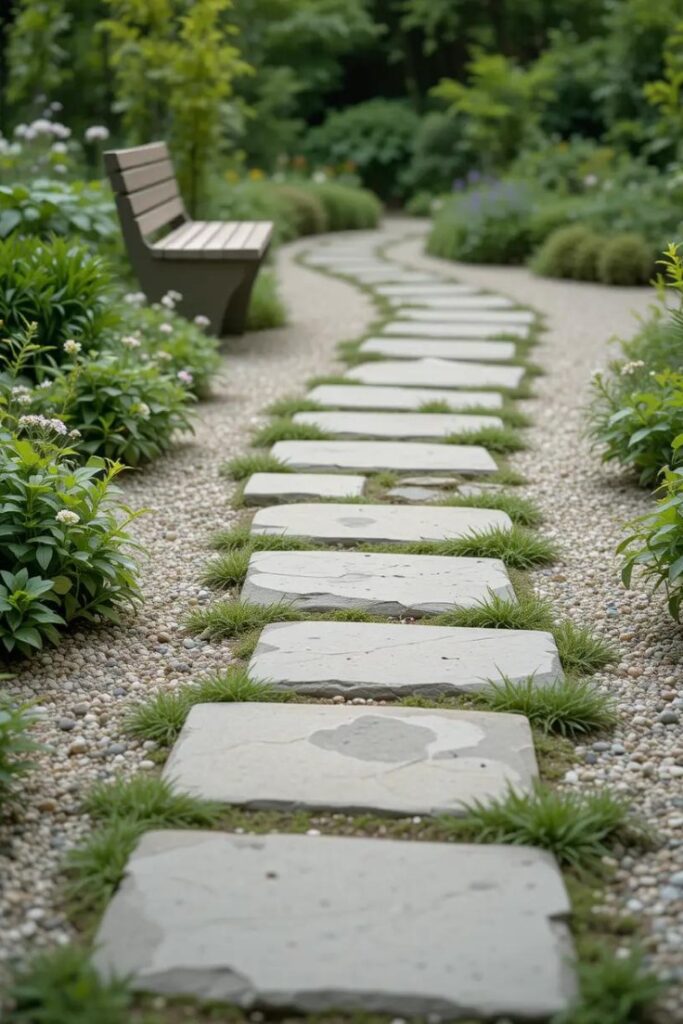
Guide visitors through your garden with a well-designed stone pathway. This rock landscaping element improves navigation while adding structure to the overall design.
Different styles include:
- Stepping stones set in gravel
- Fitted flagstone for a more formal appearance
- River rock paths with defined edges
- Crushed stone pathways for economical coverage
6. Rockery Gardens for Sloped Areas
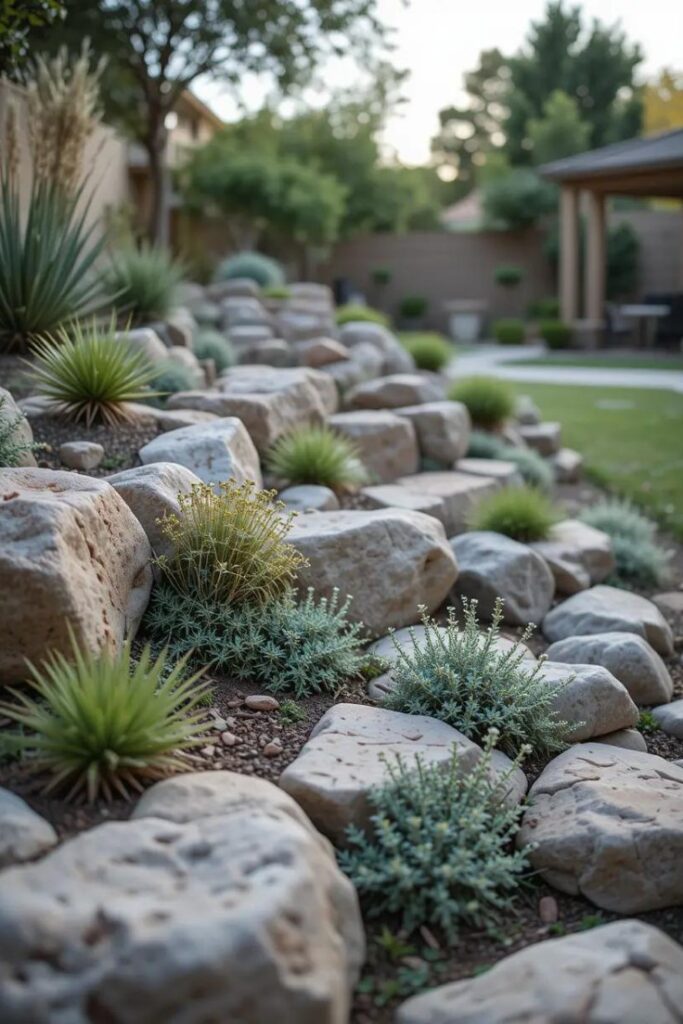
Transform challenging slopes into stunning rockery gardens featuring carefully positioned boulders and drought-tolerant plants. This rock landscaping approach turns problematic areas into focal points.
For successful rockeries:
- Position larger stones partially buried for a natural look
- Create planting pockets between rocks
- Select plants adapted to quick-draining conditions
- Consider the natural flow of water down the slope
7. Rock Mulch Alternatives
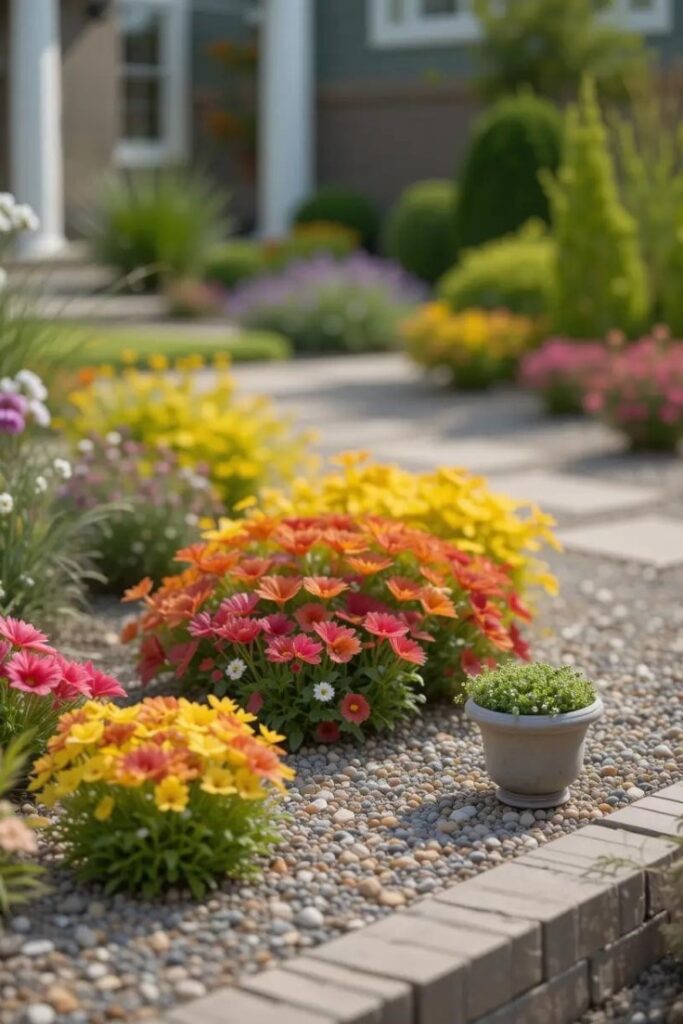
Replace traditional wood mulch with stone ground covers that never need replacement. This rock landscaping technique reduces maintenance while enhancing plant displays.
Options include:
- Decorative pea gravel in complementary colors
- Crushed granite for a fine-textured appearance
- River rock for moisture retention
- Decomposed granite for pathways and plant beds
8. Rock-Lined Raised Beds
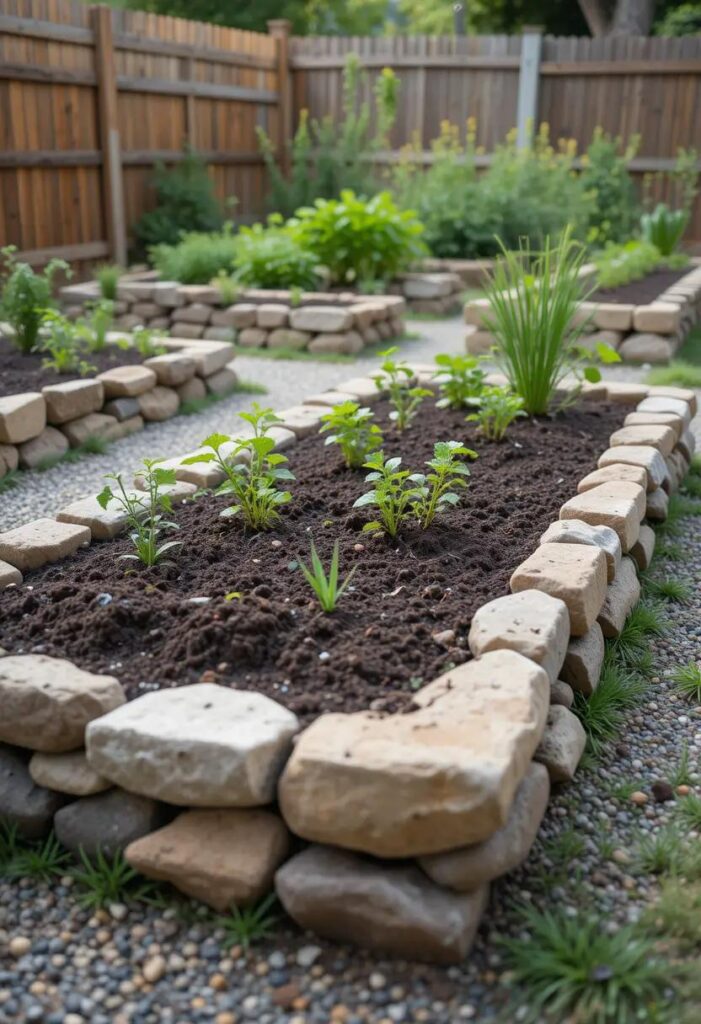
Construct elevated planting areas edged with stacked stone or large rocks to create defined growing spaces. This technique improves growing conditions while adding structure to garden designs.
Benefits include:
- Improved soil control for specialized plants
- Better drainage for sensitive species
- Enhanced accessibility for maintenance
- Visual definition between different garden areas
9. Mediterranean Gravel Gardens
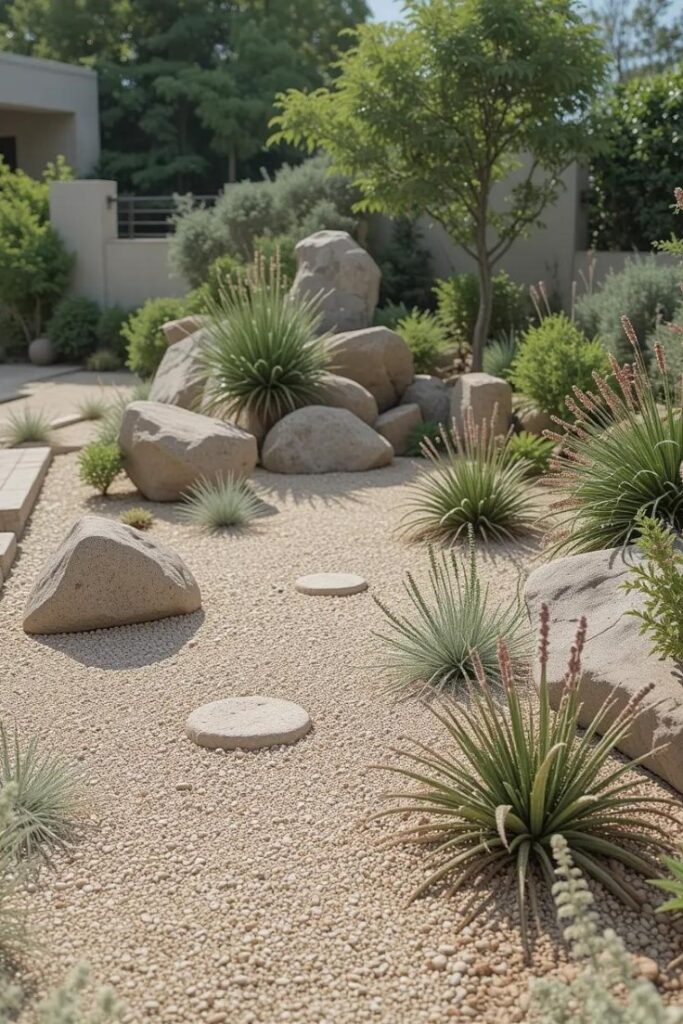
Design a drought-resistant garden inspired by Mediterranean landscapes using gravel as the primary ground cover. This approach supports water conservation while creating a distinctive aesthetic.
Essential components:
- Light-colored gravel to reflect heat
- Drought-tolerant Mediterranean herbs and perennials
- Strategic boulder placement for structural interest
- Minimal supplemental irrigation once established
10. Stone Retaining Walls
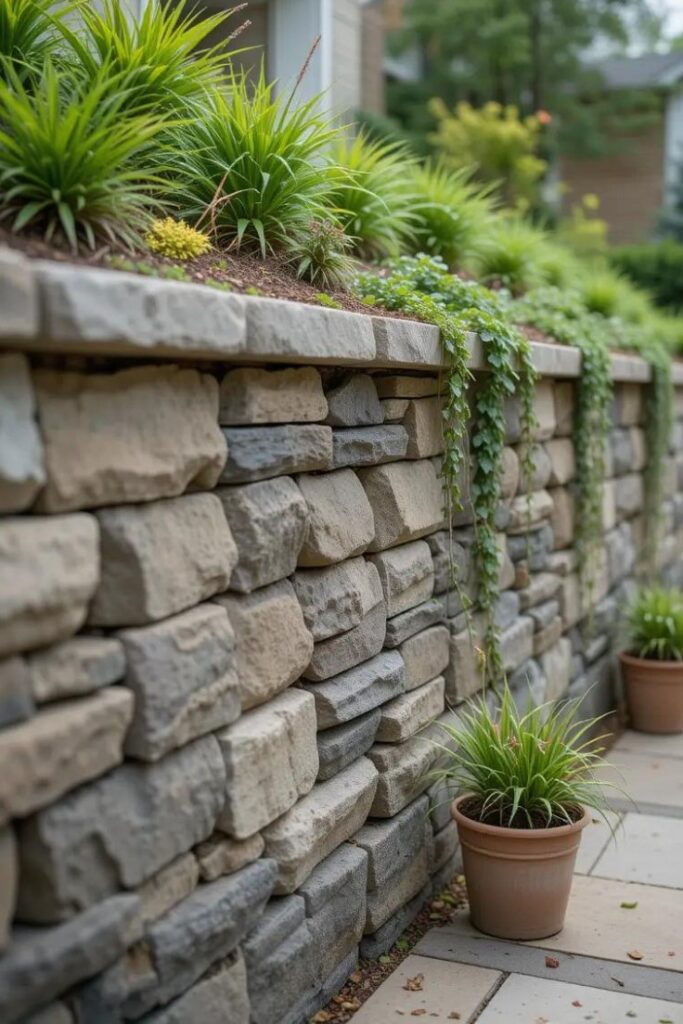
Build sturdy retaining walls from natural stone to manage elevation changes while adding architectural interest. This rock landscaping solution combines practical function with enduring beauty.
Design considerations:
- Proper drainage behind the wall structure
- Consistent construction technique for stability
- Staggered joints for structural integrity
- Plants at the base and top to soften the appearance
11. Gabion Wall Structures
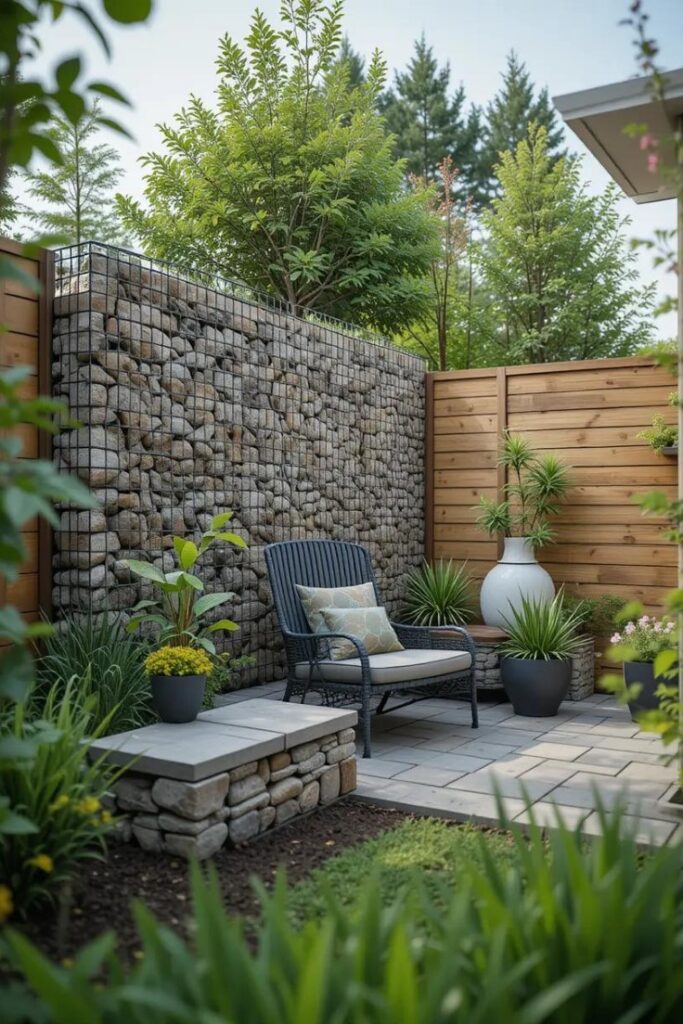
Construct modern wire cages filled with stones to create gabion walls—an industrial-inspired rock landscaping element gaining popularity in contemporary designs.
Creative applications:
- Retaining walls for sloped areas
- Decorative garden dividers
- Seating with added cushions
- Privacy screens when built to appropriate heights
12. Rock Garden Plant Companions
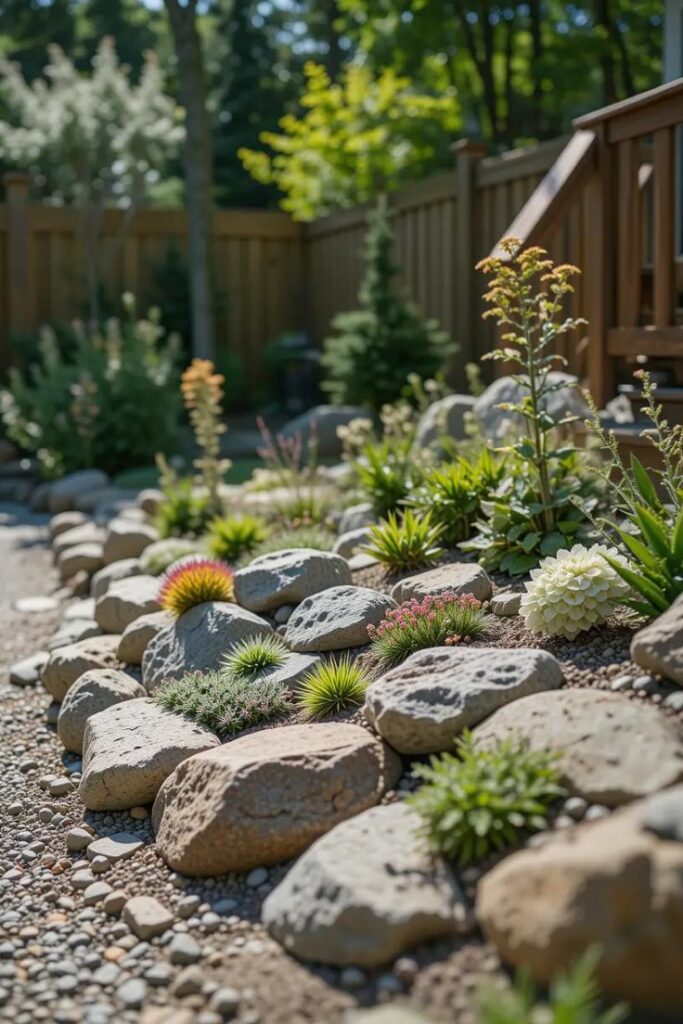
Select specialized plants that thrive among stones to create authentic rock gardens. These plant selections enhance rock landscaping with adapted species that look natural nestled between stones.
Excellent rock garden plants:
- Sedum varieties for drought tolerance
- Creeping thyme for fragrance and color
- Alpine species adapted to harsh conditions
- Low-growing conifers for year-round structure
13. Desert-Inspired Xeriscaping
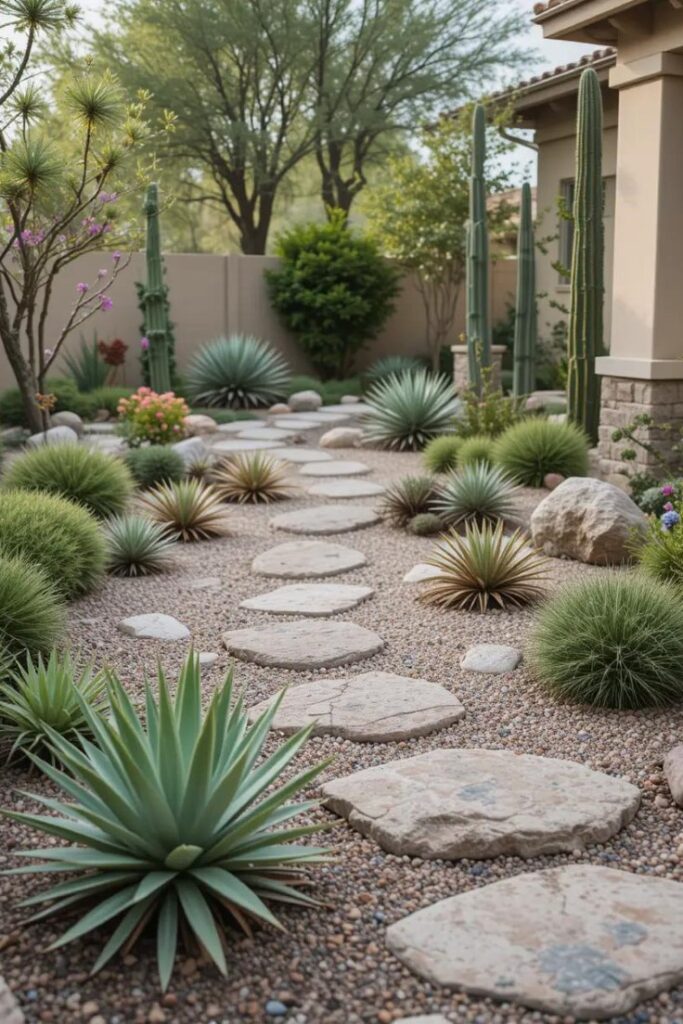
Create a water-wise landscape using principles of xeriscaping combined with strategically placed rocks and gravel. This rock landscaping approach is particularly suited to arid regions.
Key components:
- Regional stone selections that complement the environment
- Drought-resistant succulents and native plants
- Limited areas of concentrated plantings
- Strategic shade creation with larger stone structures
14. Rock Stairways for Slopes
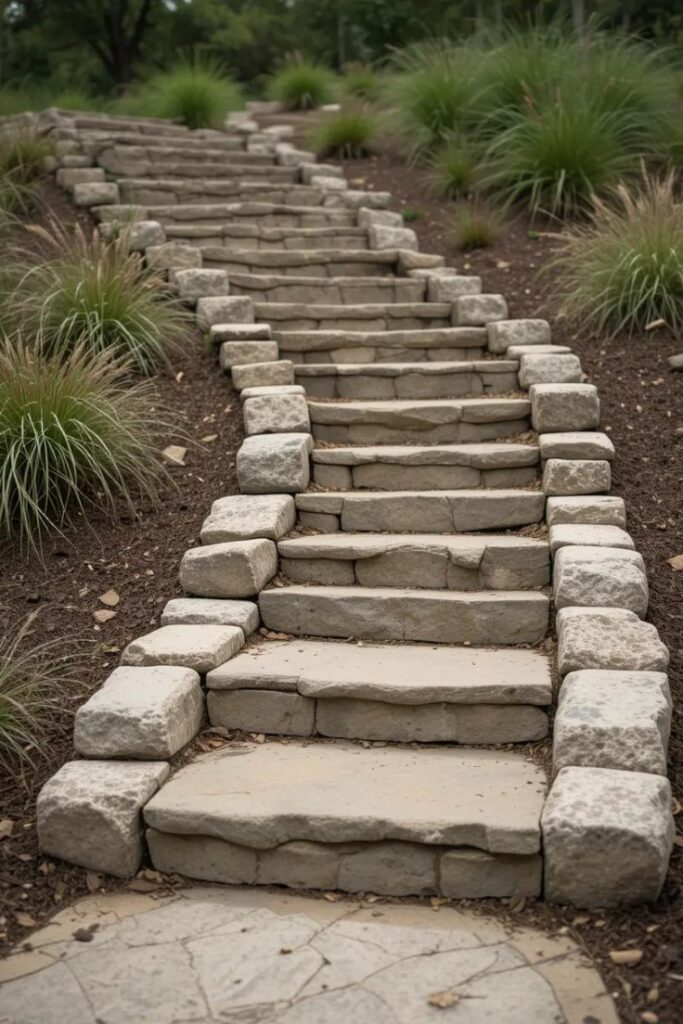
Construct natural stone steps to navigate sloped areas while enhancing the landscape design. These rock landscaping features improve accessibility while adding architectural interest.
Construction considerations:
- Consistent rise and run for safe navigation
- Proper foundation preparation for stability
- Complementary stone selection with other landscape elements
- Integrated plantings to soften edges
15. Courtyard Stone Flooring
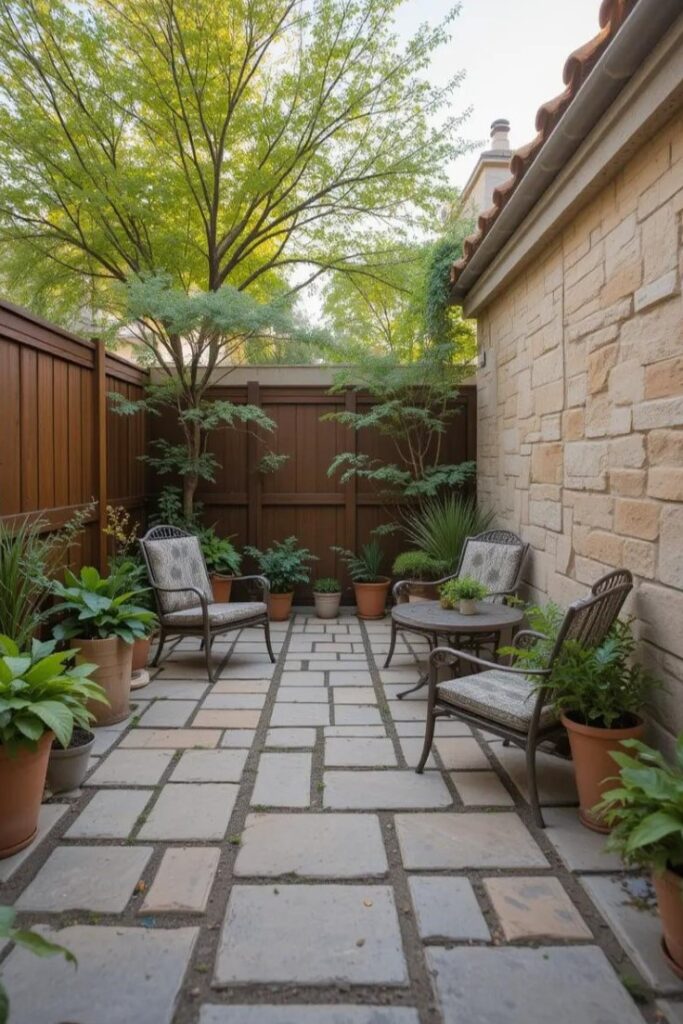
Transform intimate outdoor spaces with stone paving that creates an attractive foundation for furniture and planters. This rock landscaping application extends living space into the garden.
Material options:
- Uniform cut stone for formal designs
- Irregular flagstone for rustic appeal
- Cobblestone patterns for old-world character
- Gravel infill between larger stones for economical coverage
16. Moss and Rock Combinations
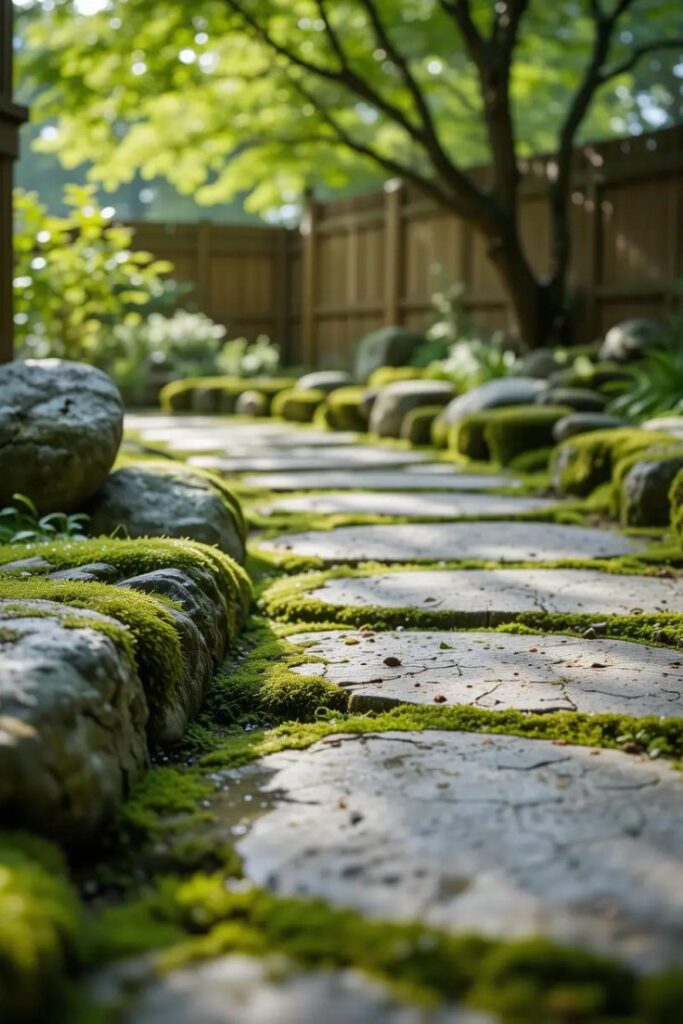
Encourage moss growth on and between stones to create established-looking rock landscaping with a sense of age and permanence. This combination softens hard surfaces while requiring minimal care.
For successful moss integration:
- Position stones in partially shaded areas
- Select porous stone types that retain moisture
- Spray stones with buttermilk solution to encourage moss establishment
- Ensure adequate humidity during establishment periods
Implementing Your Rock Landscaping Project
Before beginning your rock landscaping project, consider these important factors:
- Source materials responsibly from local suppliers to reduce transportation impacts and costs
- Calculate quantities correctly to avoid shortages or excess
- Prepare the site thoroughly with proper weed barriers where appropriate
- Consider the long-term maintenance requirements of your design
- Complement your home’s architectural style with appropriate stone selections
Remember that successful rock landscaping requires proper planning and often represents a significant initial investment. However, the durability and reduced maintenance make it cost-effective over time.
Conclusion
Rock landscaping offers many creative possibilities for homeowners seeking distinctive, low-maintenance outdoor spaces. From simple stone borders to elaborate Japanese gardens, these 16 ideas demonstrate the versatility and enduring appeal of landscaping with stone.
By incorporating these rock landscaping techniques into your yard, you’ll create a resilient outdoor environment that withstands weather extremes while providing year-round visual interest.
Question & Answers Section
How much does rock landscaping typically cost compared to traditional landscaping?
Rock landscaping generally requires a higher initial investment than grass lawns or simple plant beds. Expect to pay between $500-$1,500 per cubic yard of stone installed, depending on the material quality and installation complexity. However, the long-term savings are substantial due to reduced water bills, eliminated lawn care expenses, and minimal replacement costs.
What type of maintenance does rock landscaping require?
Rock landscaping maintenance is minimal compared to traditional options. Typical upkeep includes occasional leaf blowing, periodic weeding between stones, and refreshing smaller stones every 5-10 years as needed. Unlike lawns requiring weekly mowing, fertilization, and constant watering, rock features remain relatively stable with minimal intervention.
Can I install rock landscaping myself or should I hire a professional?
Simple rock landscaping projects like creating gravel paths or small decorative rock beds are suitable for DIY enthusiasts. However, structural elements like retaining walls, large boulder placement, or extensive terracing typically require professional equipment and expertise. Consider the weight of materials—stones are significantly heavier than soil or mulch—when deciding whether to tackle installation yourself.
What are the best plants to combine with rock landscaping?
The most successful plants for rock landscaping include drought-tolerant varieties that thrive in well-drained conditions. Consider succulents, ornamental grasses, lavender, yarrow, Russian sage, and alpine plants. Native species adapted to your regional conditions will require the least maintenance while complementing the natural aesthetic of stone elements.
How do I prevent weeds in my rock landscaping areas?
To minimize weeds in rock landscaping, install professional-grade landscape fabric beneath stone layers. Ensure fabric edges overlap by at least 6 inches and extend beyond the rock area perimeter. For additional protection, consider applying pre-emergent herbicide before installing rocks, and use multiple layers of weed barrier in particularly problematic areas.
Is rock landscaping environmentally friendly?
When properly implemented, rock landscaping offers several environmental benefits including reduced water consumption, eliminated need for chemical fertilizers and pesticides, improved drainage that reduces runoff, and minimal petroleum use from maintenance equipment. Source stones locally to minimize transportation impacts, and incorporate native plants to support local ecosystems.
How do I choose the right rocks for my landscape design?
Select rocks for your rock landscaping by considering your region’s native stone types, your home’s architectural style, existing color schemes, and the specific function needed. Rounded river rocks work well for water features, angular quarried stone creates modern aesthetics, while weathered boulders appear more natural in garden settings. Always view stone in person before purchasing, as color and texture vary significantly.